Thresholds are geometry-dependent
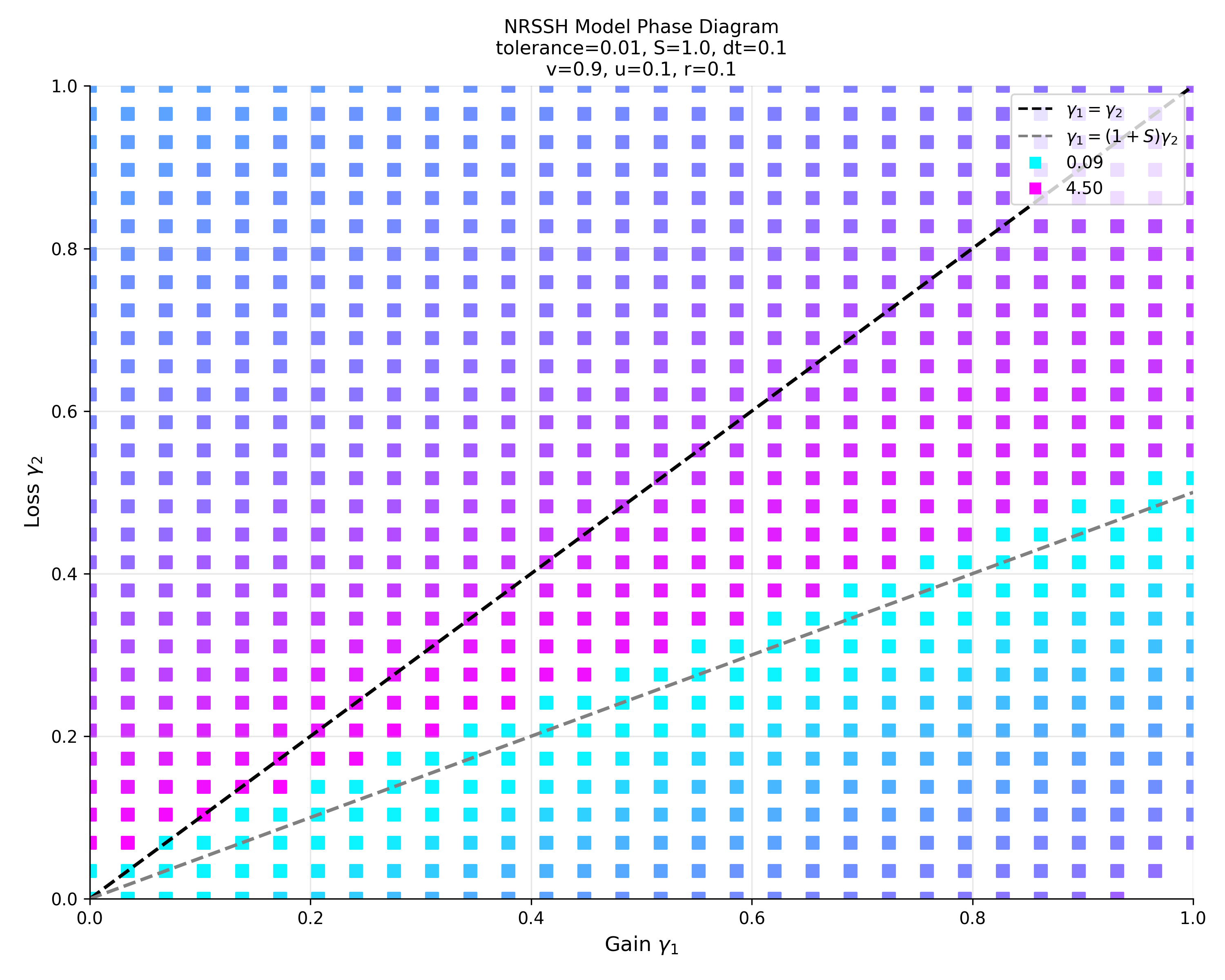
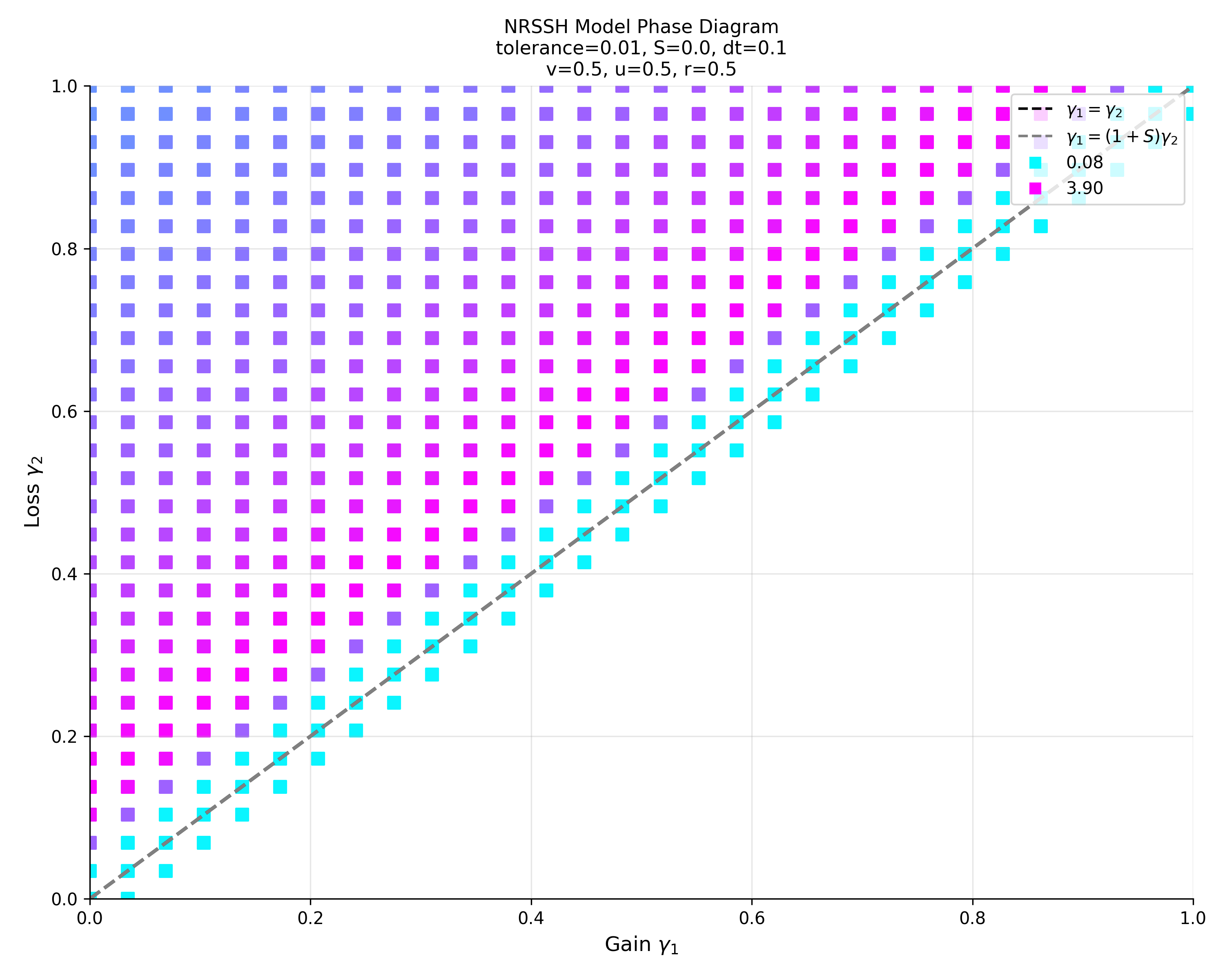
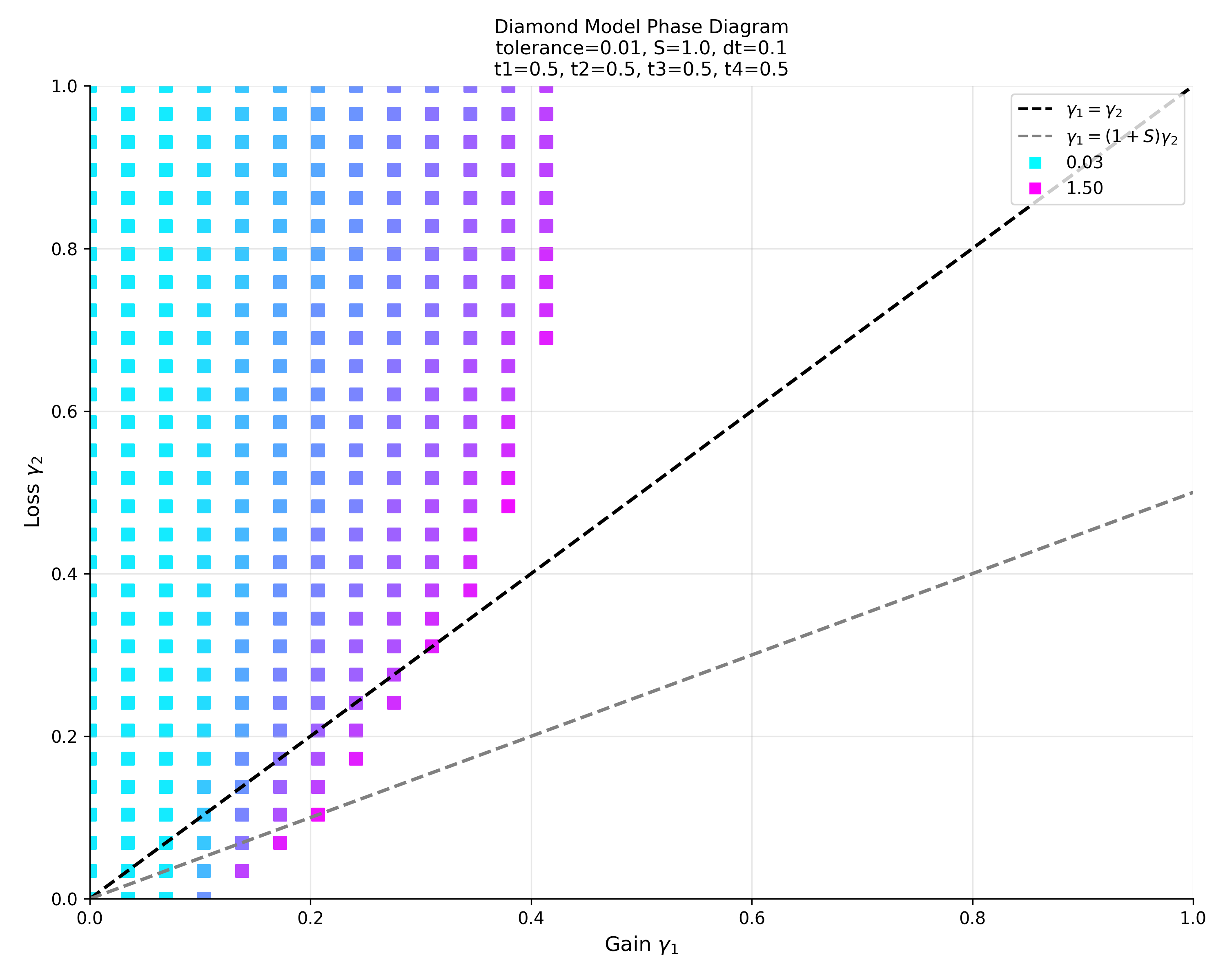
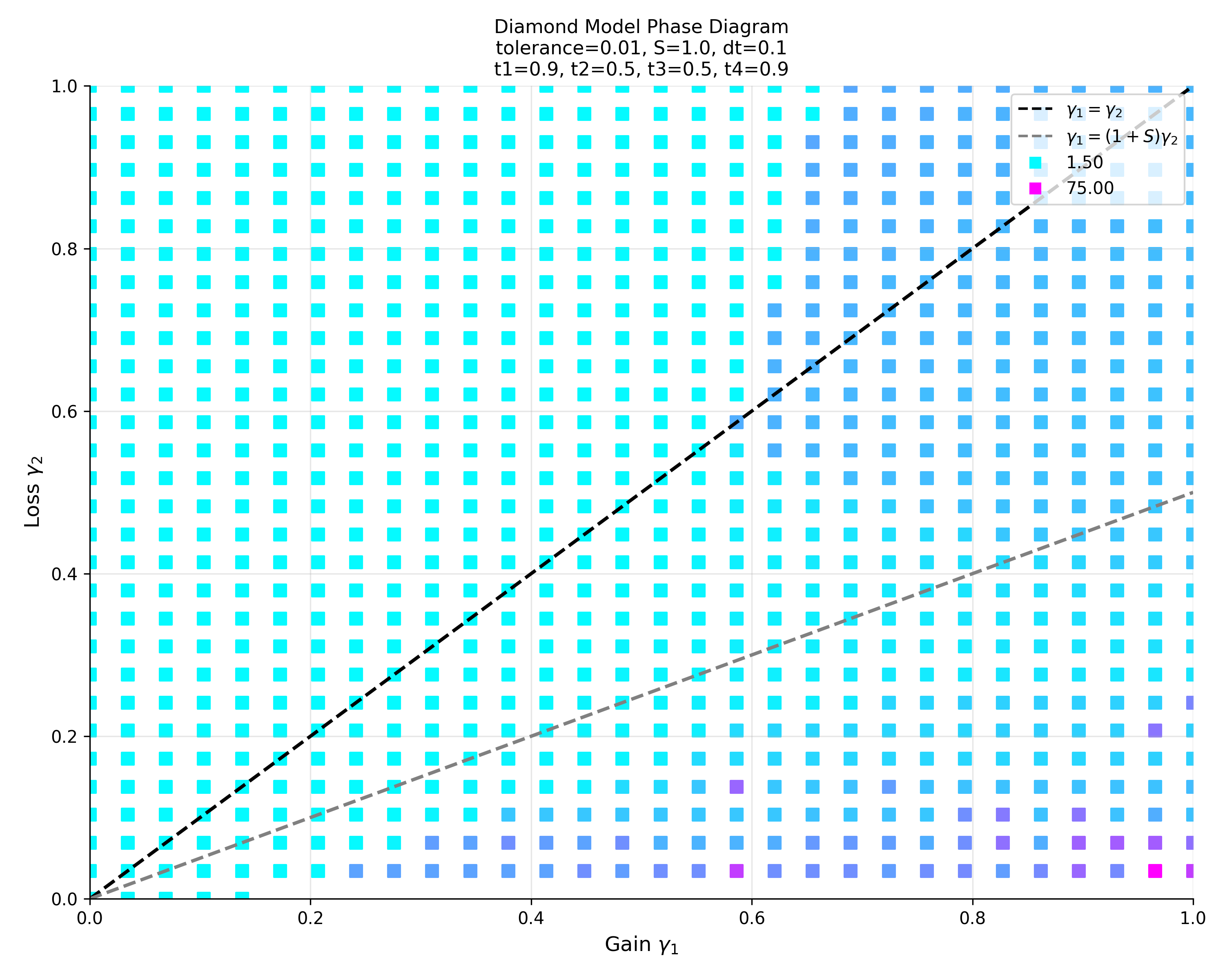
NRSSH thresholds follow the saturation-controlled gain/loss balance, while Diamond lattices bend the transition curve because gain and loss occupy different sublattices.
Research results
Curated results from NRSSH and Diamond lattice simulations, emphasizing phase structure, final-state convergence, chaotic lasing regimes, and stable topological edge behavior.
Lattice systems
The site keeps the current scientific assets while using the same card, spacing, and teal accent language as the main Sid Richards portfolio.
Result family
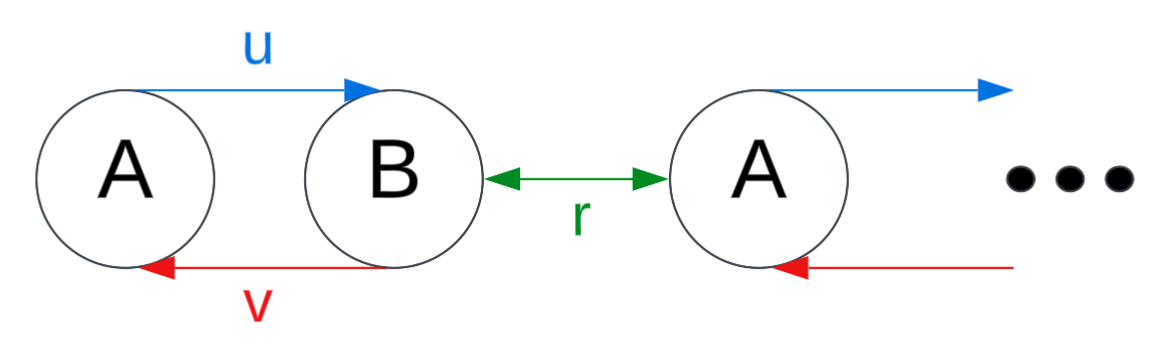
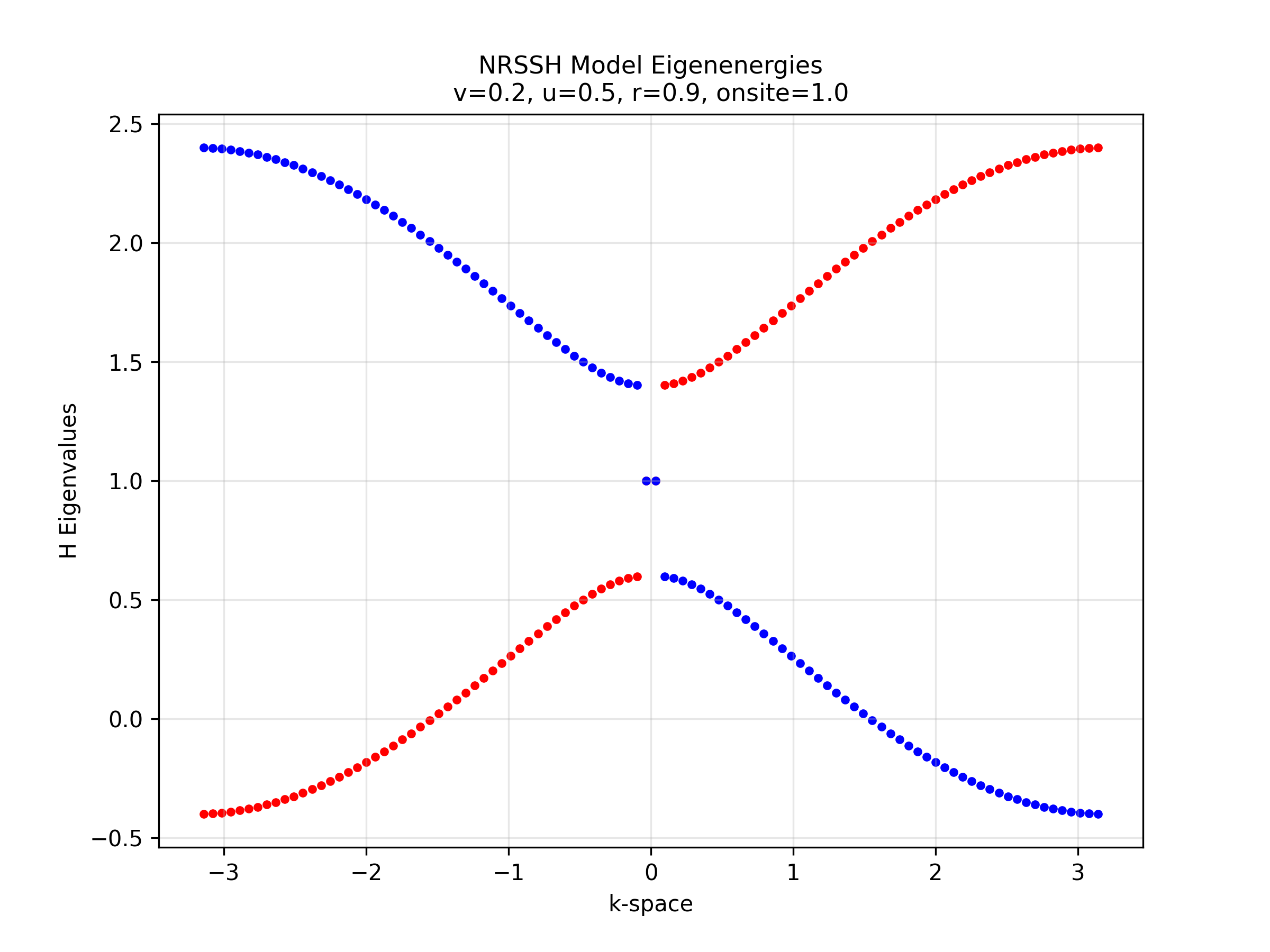
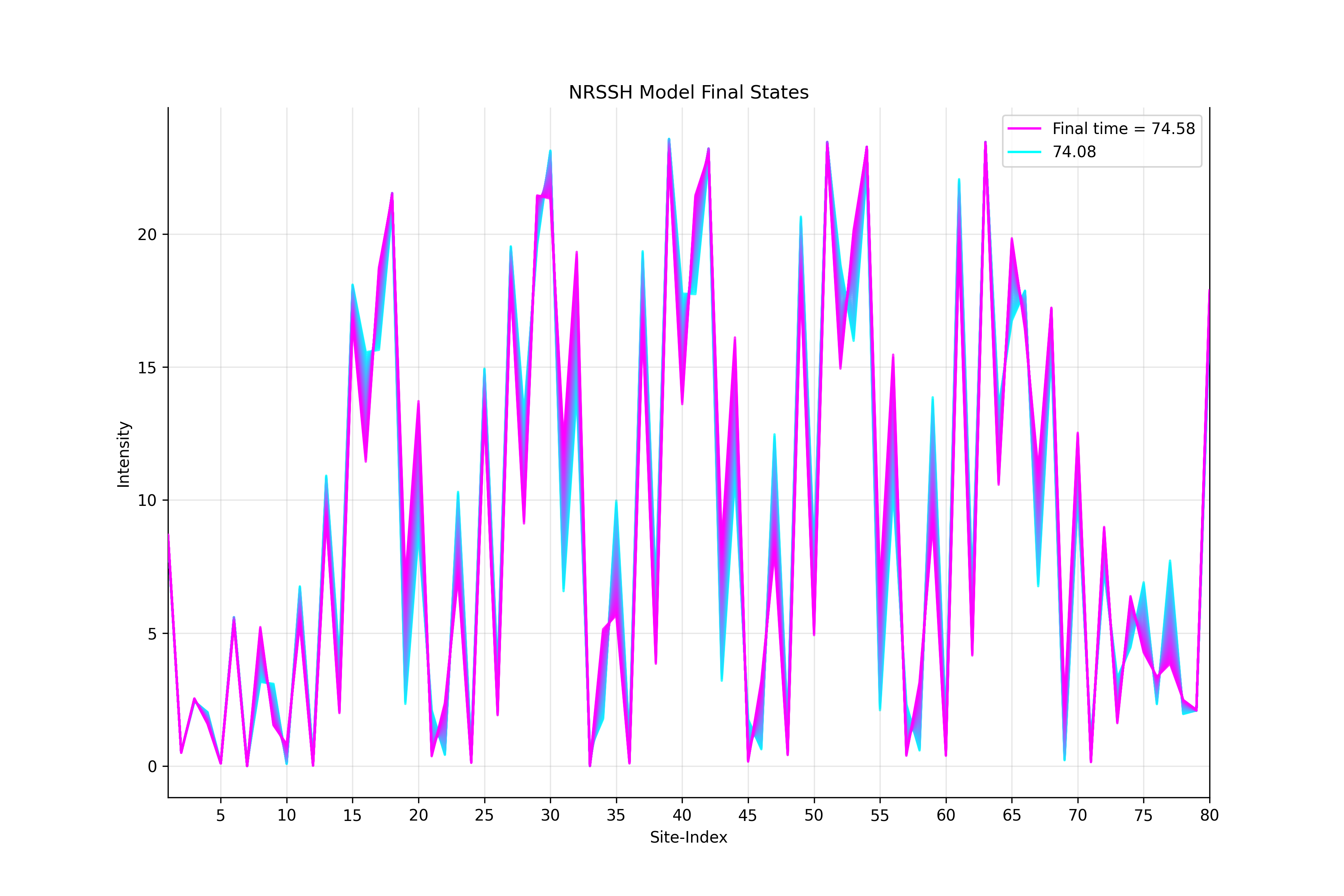
The non-reciprocal SSH model reveals threshold behavior between lossy, gain-dominated, and chaotic phases when nonlinear saturation controls the onsite gain response.
Result family
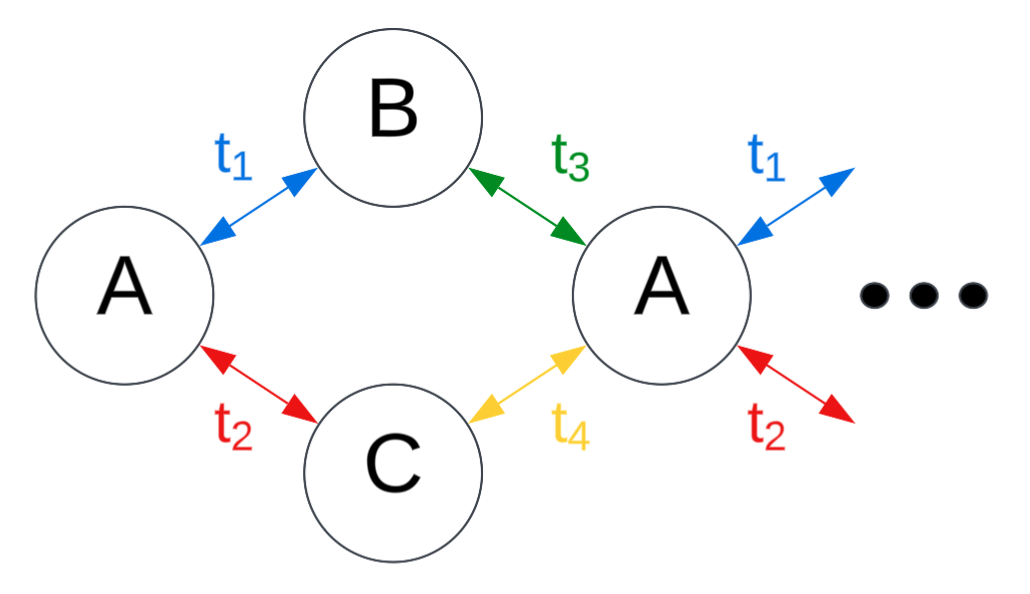
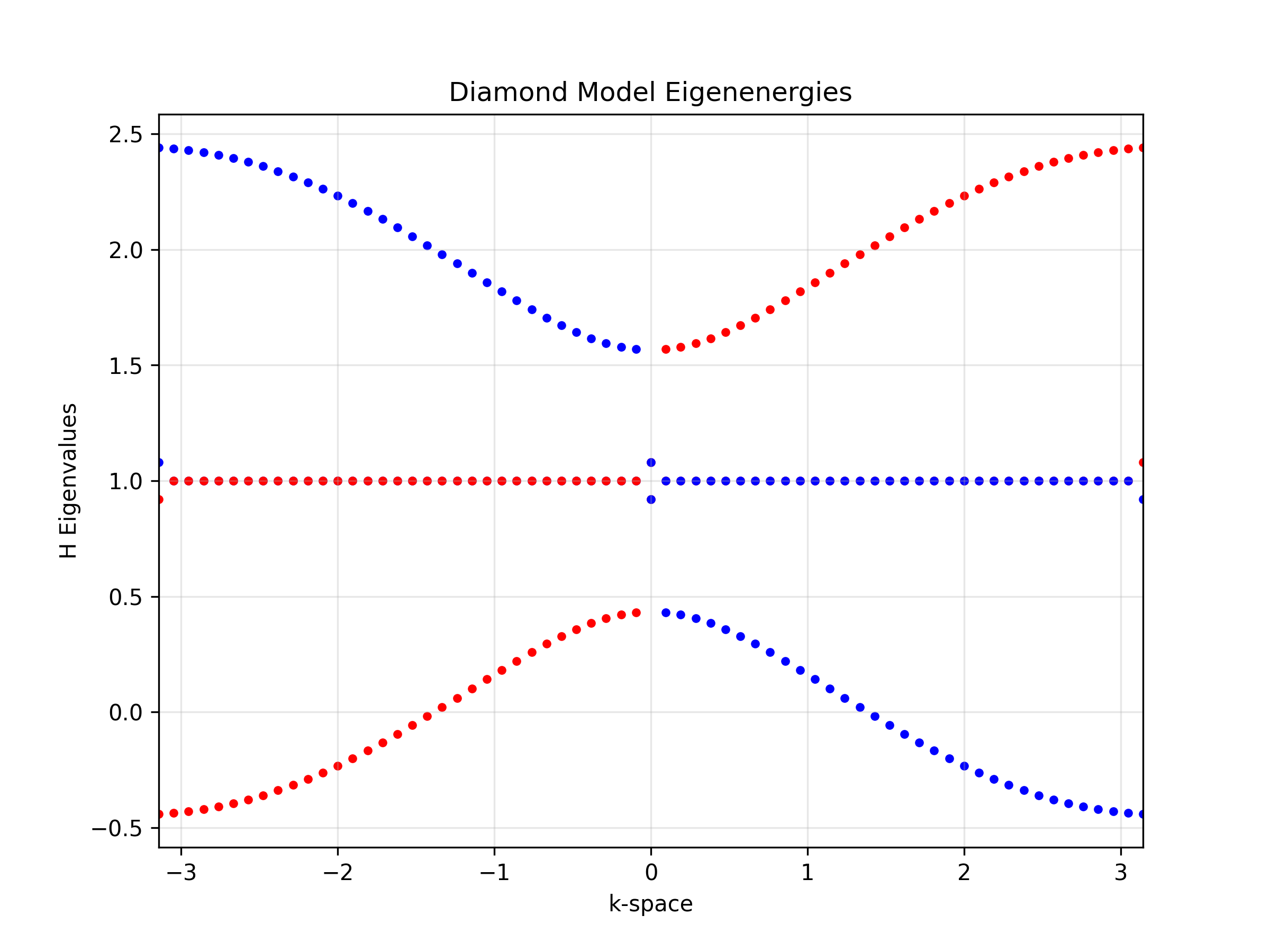
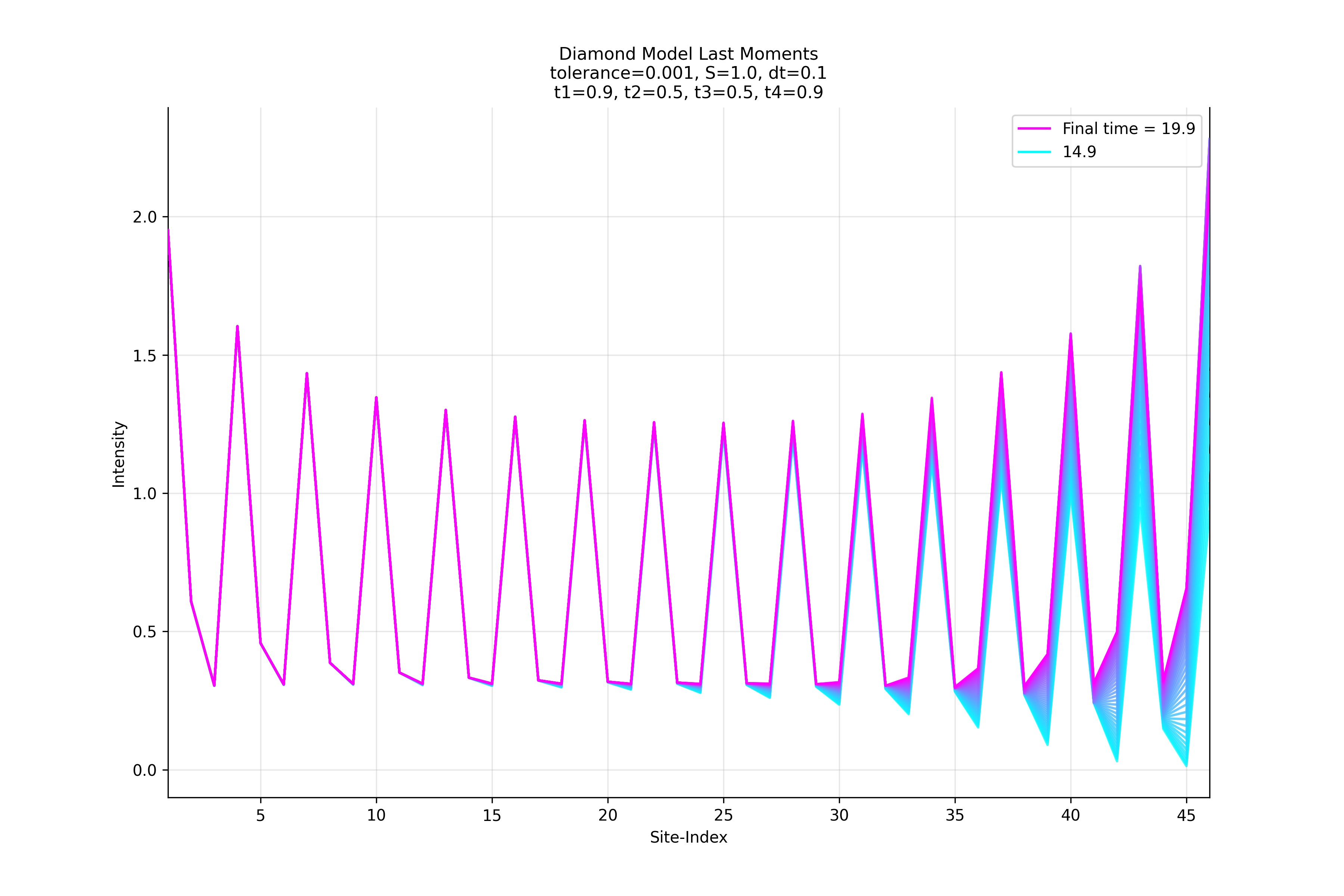
Diamond lattices show richer gain/loss structure because gain is localized on A sites while B and C sites carry loss, producing nonlinear phase boundaries and stable edge-mode regimes.
Interpretation
The simulations connect phase diagrams to physical laser behavior: stable emission, loss-dominated decay, chaotic lasing, and topologically protected edge localization.
NRSSH thresholds follow the saturation-controlled gain/loss balance, while Diamond lattices bend the transition curve because gain and loss occupy different sublattices.
Unsaturated gain produces runaway intensities; saturated gain can produce stable final states or chaotic oscillation depending on hopping.
Face-dimerized Diamond lattices support stable topological phases, longer convergence times, and visible critical transition behavior.
Documentation
The result figures, documentation pages, package metadata, and source repository remain linked from the deployed site.